tl dr;
Brought Google reviews into the booking page, making reputation visible at the moment of decision and creating a clear upgrade path for businesses.
Impact
12% of users connected , 8% upgraded to paid plan during the launch month
Contributes 9% of monthly Pro upgrades
Role
Sole Product designer
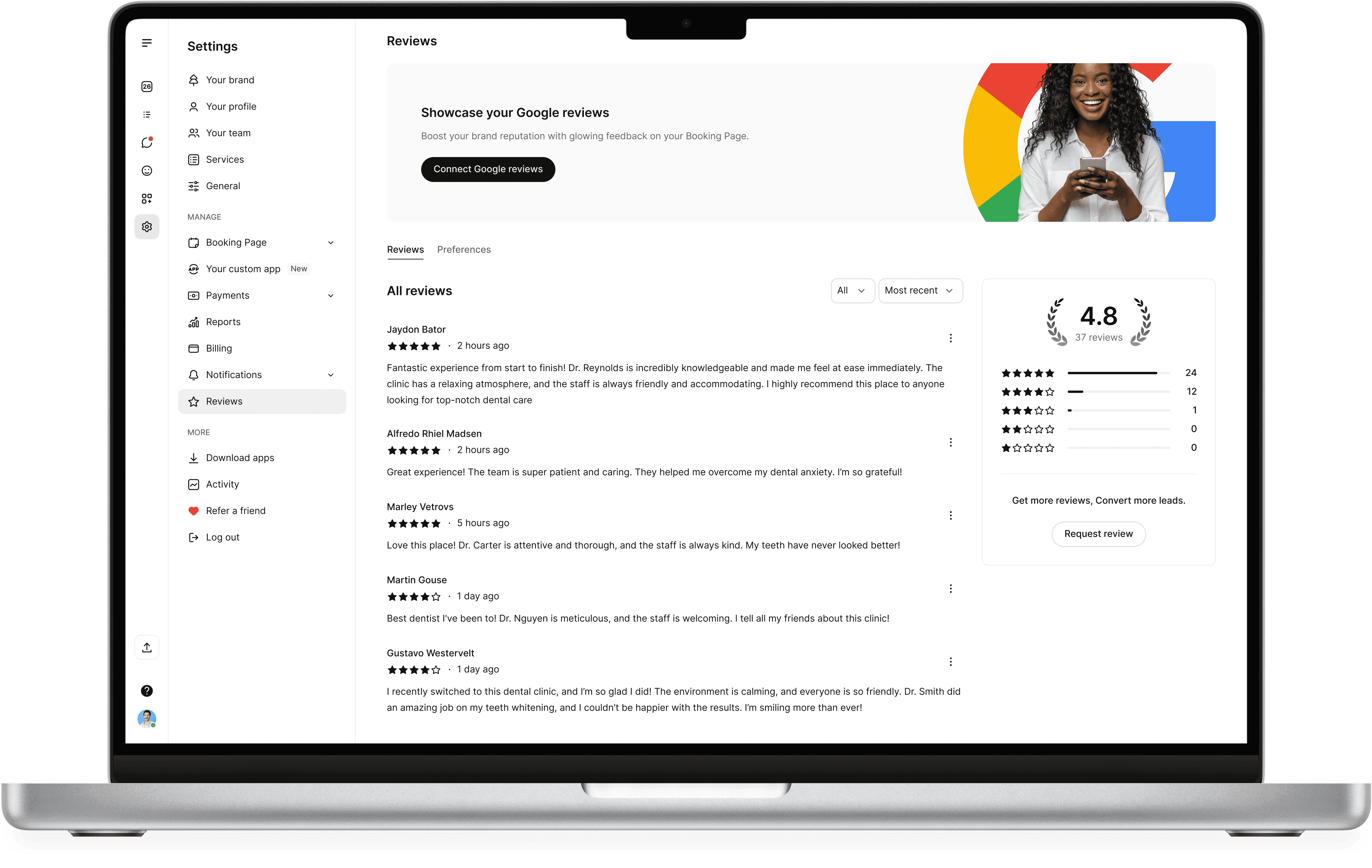
Setmore is an appointment booking platform used by independent practices, salons, clinics, and to manage bookings, payments, and customers.
Showcase businesses’ existing Google reputation directly within the booking flow, while designing a natural upgrade path for those actively collecting reviews.
Refining scope
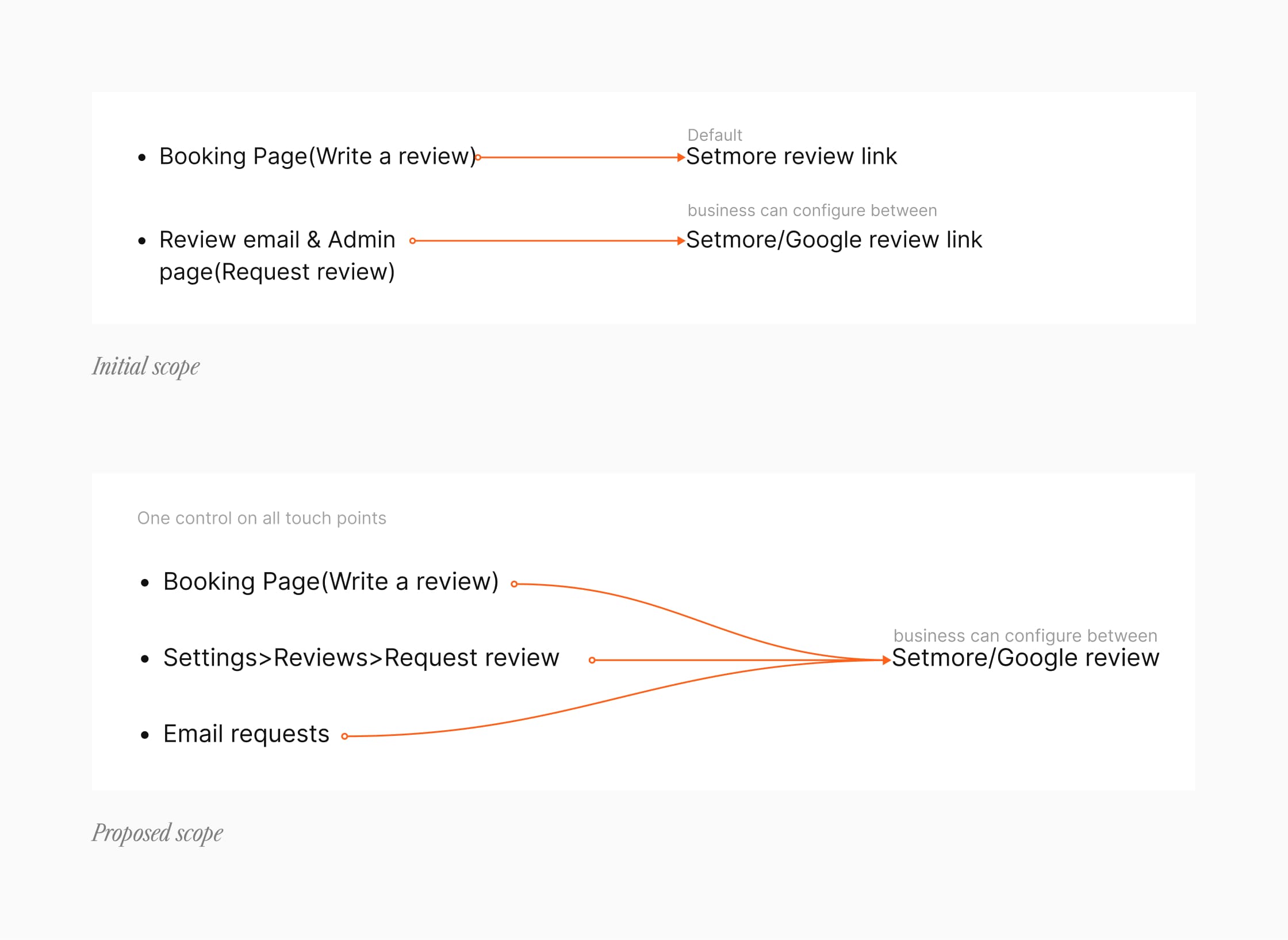
The initial MVP split review collection across surfaces:
Booking Page collected Setmore reviews
Email requests allowed choosing between platforms
This led to fragmented reviews with no clear system to manage them. I redefined the model:
Google review collection becomes a Pro feature
Free users can still display existing Google reviews
This aligned the experience into a single mental model while introducing a clear value boundary.
Design decisions
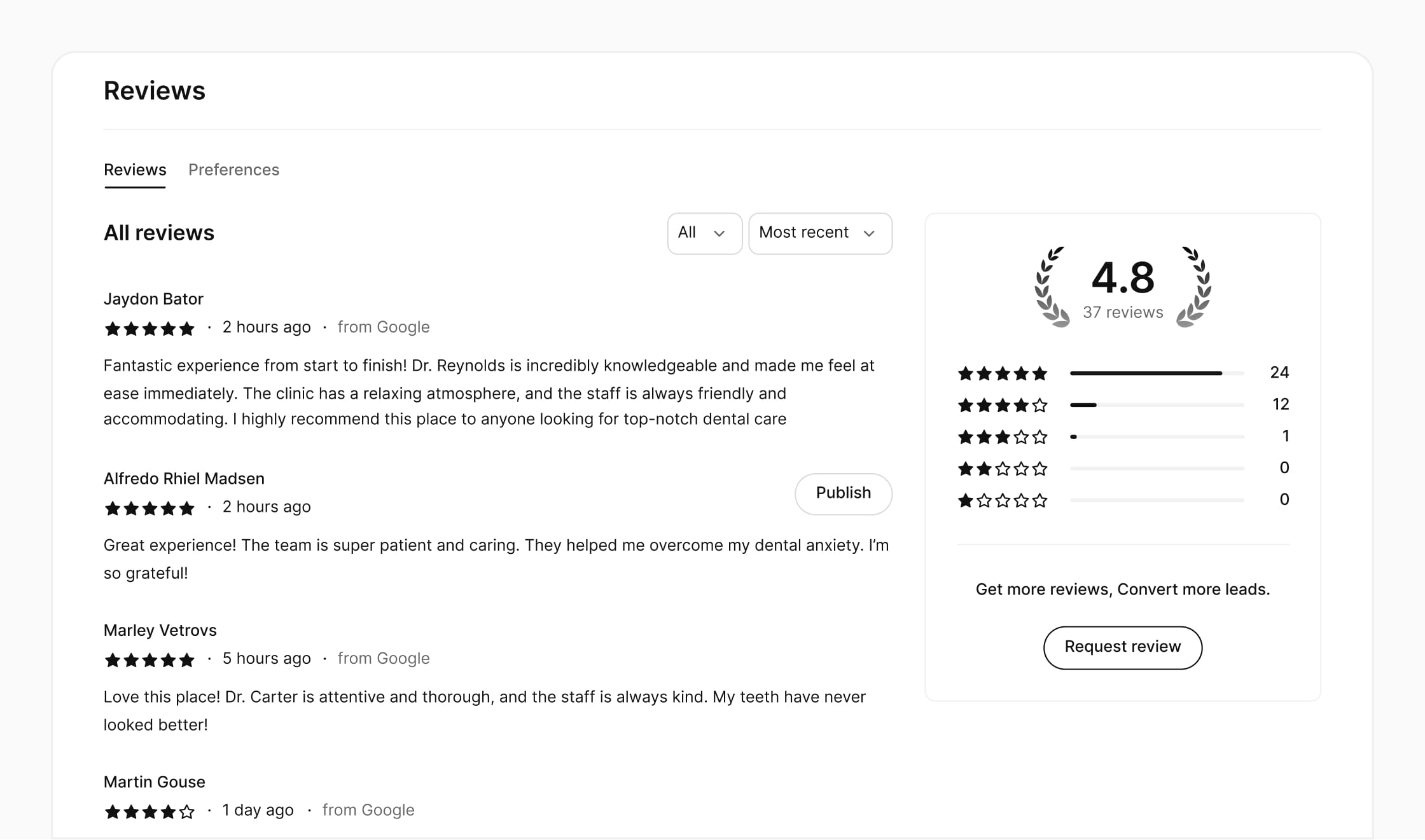
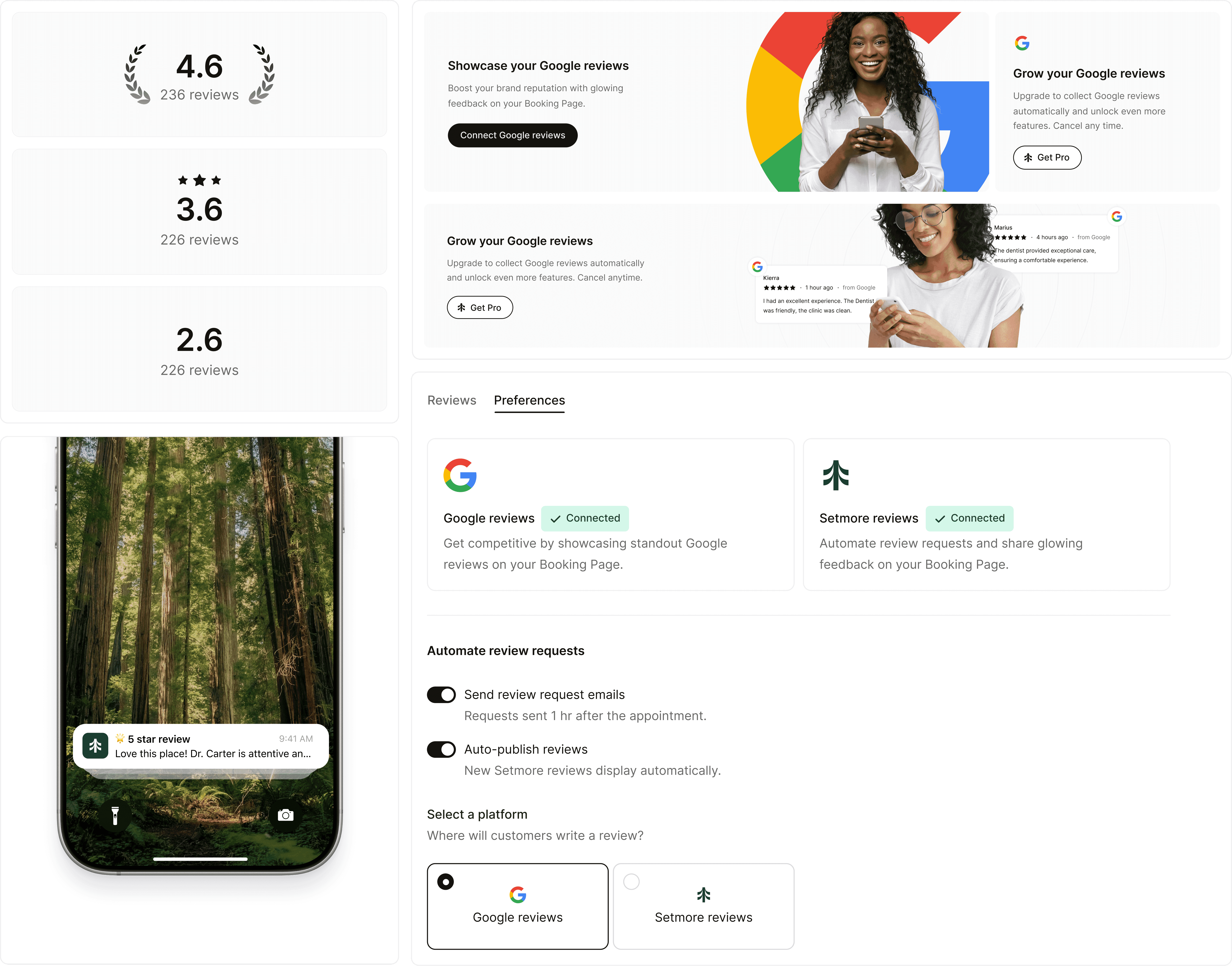
Unified reviews dashboard
The original plan synced Google reviews directly to the Booking Page with no in-app view, meaning businesses had to leave the app to see what was displayed. Since the app is already where they manage bookings, payments, and customers, bringing reviews in-app was the obvious call.
A stakeholder proposal led with a forest banner, Google badge, and large brand widget. I pushed back: it buried primary information and didn't scale across business states. The final design surfaces the review list, rating, and controls first, with platform source shown without friction.
Integration setup
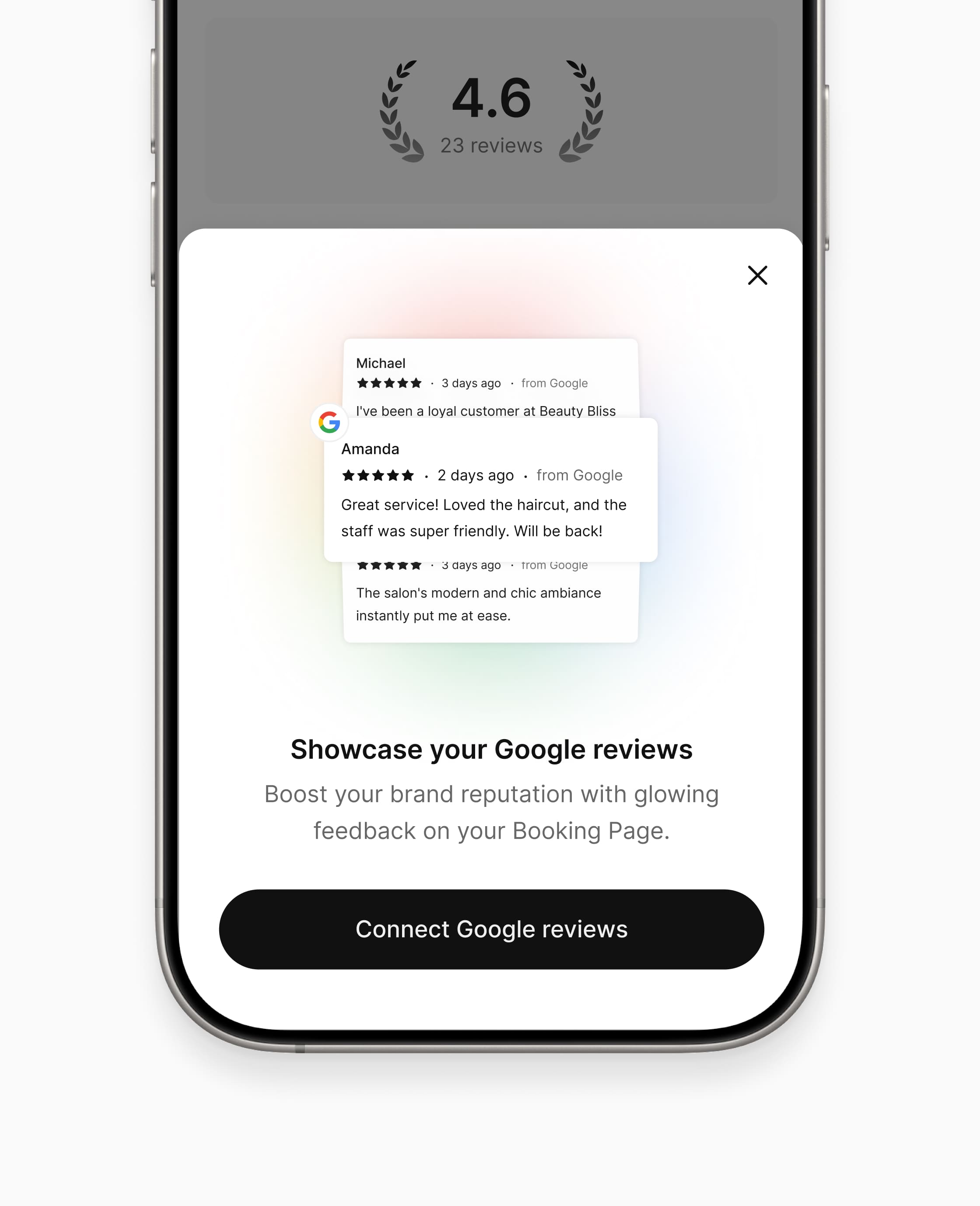
Setmore already had a familiar pattern for third-party connections. I followed this to reduce learning overhead, while ensuring the setup supports onboarding flows where Google Business can be connected early.
Booking page
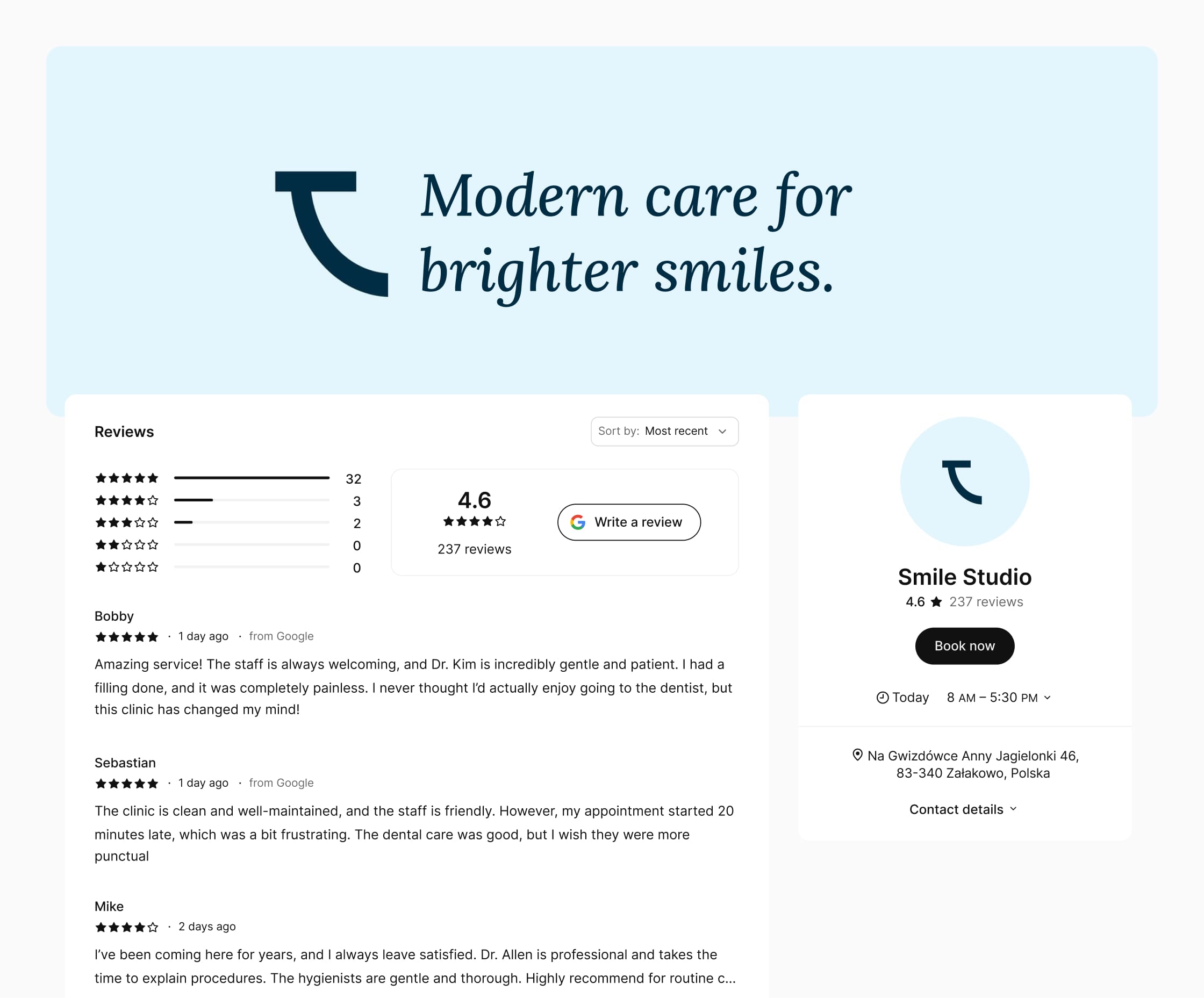
Google reviews are displayed alongside Setmore reviews, clearly labelled as “from Google.”
This label was intentional, it reinforces credibility by signaling the review comes from an external, trusted platform, right at the decision moment.
Designing for the upgrade moment
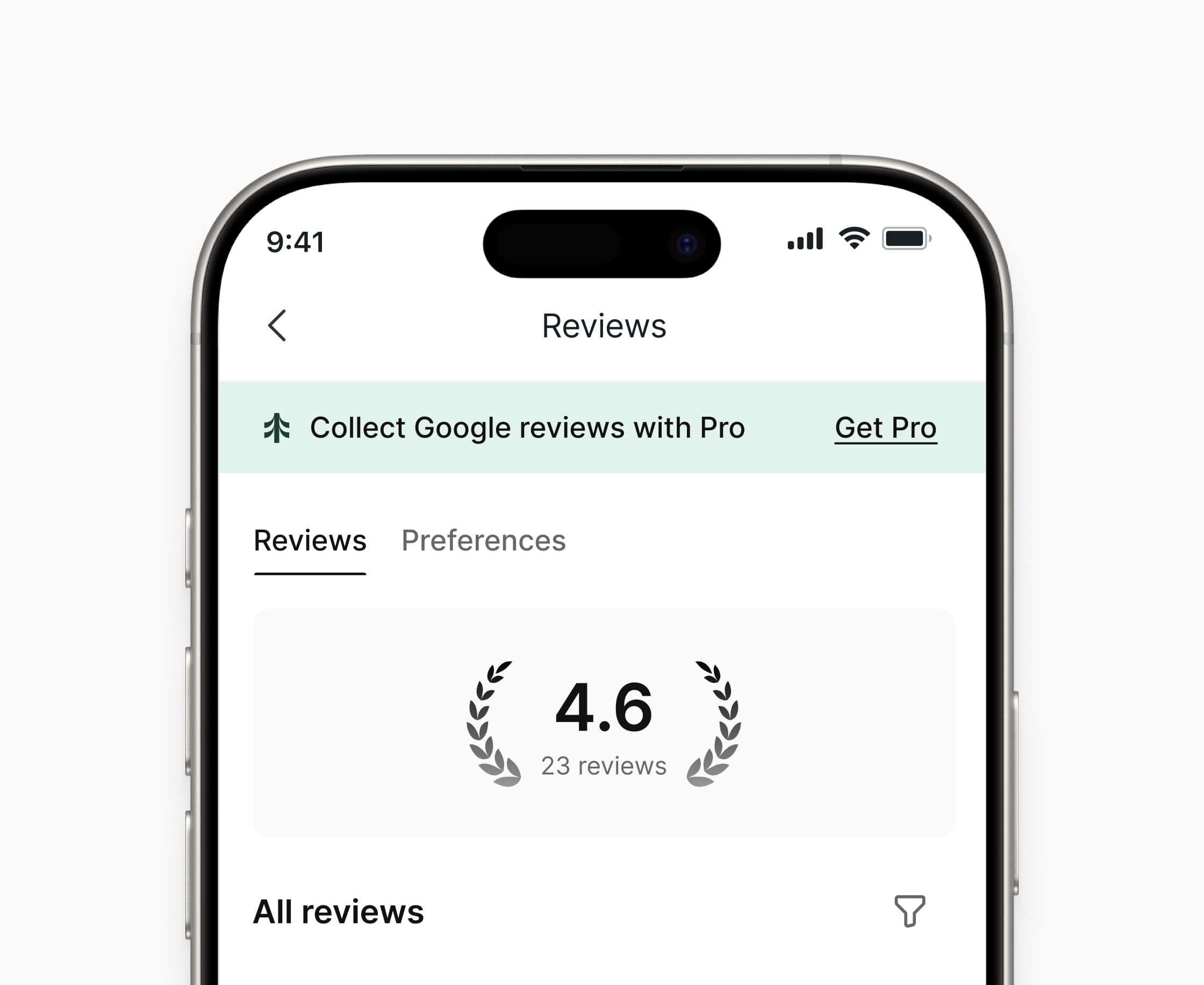
The upgrade prompt appears inline, at the moment businesses need more control—not hidden in settings.
Pro users can collect and display Google reviews
Free users can display existing reviews only
This creates a clear value distinction without degrading the free experience.
Validation through prototyping
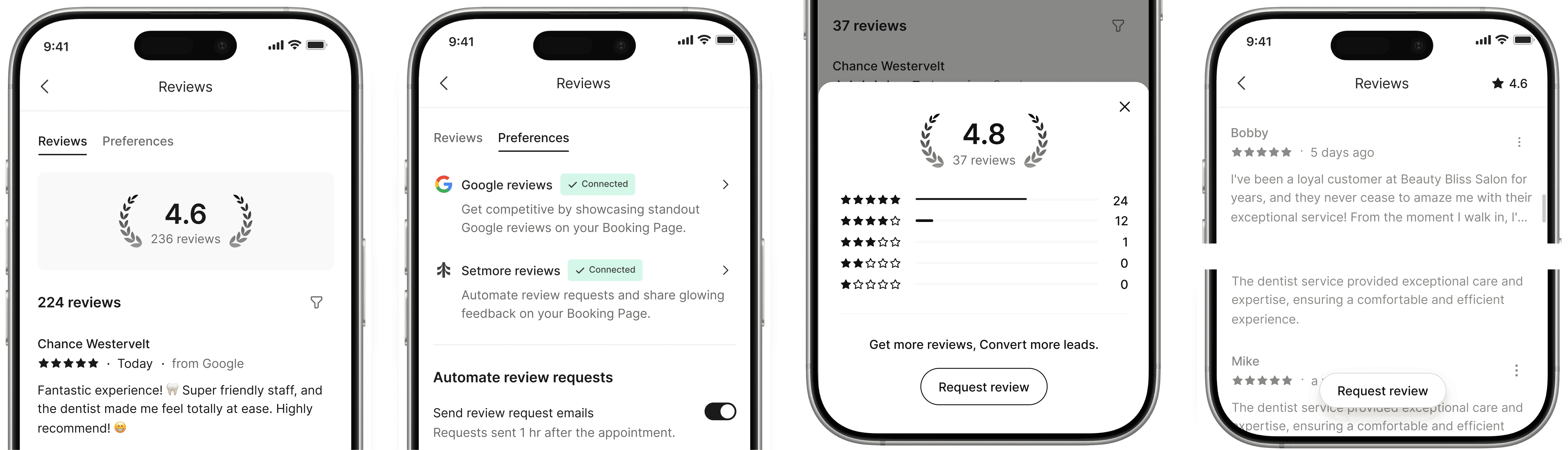
I built a working prototype to validate the mobile experience. Testing revealed issues in filter behavior, managing preference , and button interactions, which were resolved before launch and later standardized within the design system.
12% of users connected durign the launch month
8% upgraded to paid plan during the launch month
Contributes 9% of monthly Pro upgrades
there's certainly more to the story, chat here :)